
Houston DWI Defenseby a Former Police Officer.
Thirteen years on the Houston police force. SFST certified. Hands-on gas chromatography training. Trial tested. Defending DWI charges in Harris, Montgomery, and Galveston Counties with flat-fee transparency.

The 15-day clock starts when you are served the notice of suspension.
If you refused testing or failed a breath test, the officer serves a Notice of Suspension (DIC-25) and a 15-day deadline to request an Administrative License Revocation (ALR) hearing begins. In blood-draw cases there is usually no deadline until the lab result returns at 0.08 or higher — then DPS mails a notice and a 20-day deadline applies. Miss the applicable deadline and the license is suspended automatically on day 40.
Evidence preservation, body-cam and dash-cam requests, and procedural deadlines all start running immediately. The earlier the DWI case is reviewed, the more options remain available.
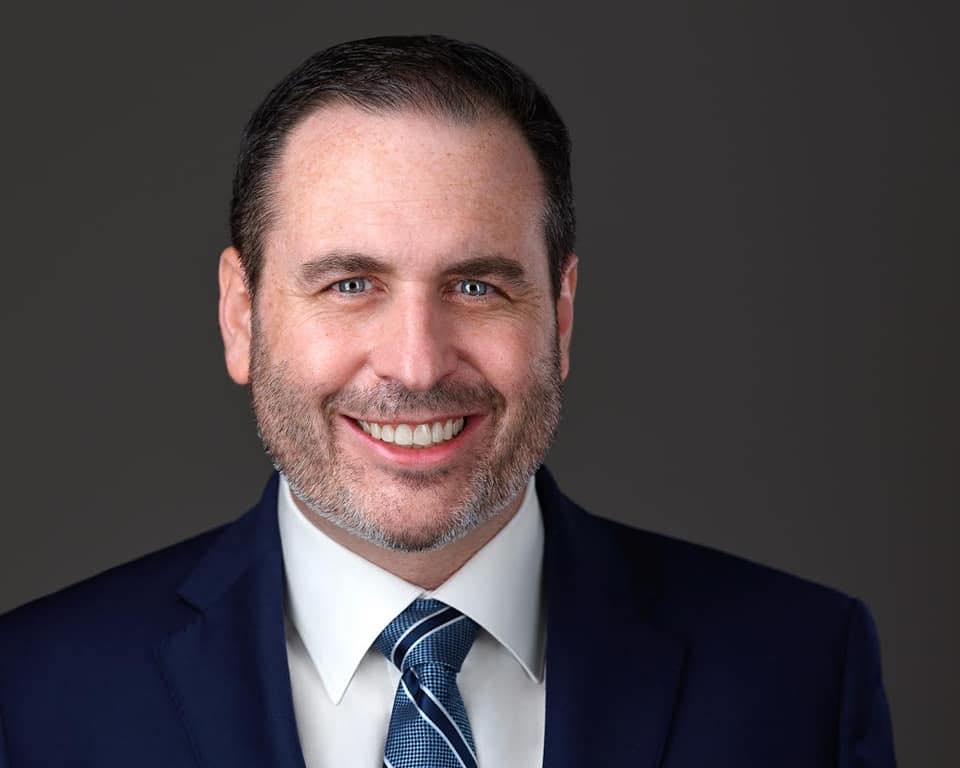
Kenneth V. Mitchell
Houston DWI Defense · KVM Law Firm, PLLC
Before becoming a DWI defense attorney, Kenneth spent 13 years as a Texas police officer — including service in the Hit and Run and Vehicular Crimes Division of the Houston Police Department. He has personally conducted traffic stops, administered Standardized Field Sobriety Tests, and built DWI cases from the law enforcement side. He uses that operational knowledge to challenge the State’s evidence from the inside out.
Arrested for DWI? Time is working against you.
If you need a Houston DWI lawyer who has actually conducted DWI investigations from the other side of the badge, you are in the right place. Texas gives you only 15 days from the notice of suspension to request an ALR hearing and fight for your license — and the decisions you make right now will shape everything that follows.
Attorney Kenneth V. Mitchell is a former police officer with 13 years of law enforcement experience, a Master Peace Officer License holder, and an SFST-certified attorney who has personally conducted DWI investigations, administered field sobriety tests, and operated breath testing equipment. He knows how these cases are built from the inside — and he knows where they break down.
This is not a volume practice. You work directly with your attorney. Cases are prepared assuming they may go to trial. Defense is handled on a flat-fee basis — one clear price, discussed upfront.
What the State must actually prove.
Texas Penal Code § 49.04 defines DWI. The prosecution must prove every element beyond a reasonable doubt.
Under Texas Penal Code § 49.04, a person commits the offense of Driving While Intoxicated if they operate a motor vehicle in a public place while intoxicated. That single sentence contains four elements, and the prosecution must prove every one of them beyond a reasonable doubt.
Two Definitions of Intoxication
Texas law defines “intoxicated” in two distinct ways under Penal Code § 49.01(2):
- Loss of Normal Use: Not having the normal use of mental or physical faculties by reason of the introduction of alcohol, a controlled substance, a drug, a dangerous drug, a combination of two or more of those substances, or any other substance into the body.
- BAC of 0.08 or More: Having an alcohol concentration of 0.08 or more, as shown by analysis of blood, breath, or urine.
BAC Thresholds in Texas
- BAC 0.08+: Standard legal limit for adults 21 and over.
- BAC 0.04+: Legal limit for commercial drivers (CDL holders).
- Any detectable amount: Zero tolerance for drivers under 21 — DUI rather than DWI.
- BAC 0.15+: Enhanced penalties — Class A misdemeanor even on a first offense.
From first offense to felony. Every DWI case is different.
Six core DWI practice areas. Every case handled personally by attorney Kenneth V. Mitchell across Harris, Montgomery, and Galveston Counties.
First-Time DWI
Class B misdemeanor with up to 180 days in jail and a 1-year license suspension. First-time DWI charges defended with attention to the stop, SFST procedures, and breath/blood evidence.
First DWI Defense → Tex. Penal Code § 49.09Repeat & Felony DWI
Second and subsequent DWI charges carry enhanced penalties. Third-offense DWI is a third-degree felony. Defense focused on prior conviction challenges and procedural attacks.
Felony DWI Defense → Tex. Transp. Code Ch. 524 & 724ALR & License Defense
You have only 15 days from the notice of suspension to request an Administrative License Revocation hearing in refusal and breath-failure cases. We file fast.
ALR Hearing Defense → Forensic Blood AnalysisBlood Test Challenges
Hands-on gas chromatography training. Calibration logs, chain of custody, retention time, and operator certification — the technical attacks that decide blood-draw DWI cases.
Blood Test Defense → Intoxilyzer & SFST ProtocolsBreath Test Challenges
SFST scoring errors, intoxilyzer calibration failures, operator certification issues. Trial-tested cross-examination of arresting officers on the procedures Kenneth used to run himself.
Breath Test Defense → Tex. Penal Code § 49.045 & 49.07DWI with Child & Aggravated
DWI with a passenger under 15 is a state jail felony. Intoxication assault and manslaughter carry serious felony consequences. Defense focused on intent and causation.
Aggravated DWI Defense →Penalties by charge level.
Every tier of Texas DWI — from a first misdemeanor to intoxication manslaughter under SB 745.
First DWI
A first DWI is a Class B misdemeanor in Texas. Penalties scale with circumstances, including whether an open container was present and your BAC level.
- Fine: Up to $2,000
- Jail: 72 hours to 180 days (minimum 72 hours; 6 days minimum if open container present)
- License suspension: 90 days to 1 year
- DWI education program required
- Possible ignition interlock device (IID), especially if BAC was 0.08+
- State traffic fine: $3,000 paid at conviction (Tex. Code Crim. Proc. art. 102.020 — HB 2048 ended annual surcharges in 2019)
First DWI with BAC 0.15+
Under current Texas law, a first-time DWI with a BAC at or above 0.15% is automatically elevated to a Class A misdemeanor regardless of any other aggravating factor.
- Fine: Up to $4,000
- Jail: Up to 1 year
- IID likely required
DWI in a School Crossing Zone
New as of September 1, 2025 under SB 826 (89th Leg.). If you operate a motor vehicle while intoxicated in a school crossing zone during the time the reduced speed limit applies, the offense is automatically a state jail felony — regardless of BAC or prior record. A standard Class B misdemeanor leaps to a felony based purely on location and timing.
Learn more about DWI school zone defense →
Texas Penal Code § 49.09(a) Class A misdemeanor enhancement — up to 1 year jail, $4,000 fine, mandatory ignition interlock. Tex. Penal Code § 49.09(b)(2) third-degree felony — 2 to 10 years TDCJ, fine up to $10,000, no lookback period on priors. Gas chromatography challenges, chain of custody, search warrant issues, lab methodology. Forensic DWI defense angles. Intoxilyzer 9000 challenges — 15-minute observation period, operator certification, mouth alcohol, instrument calibration.Second DWI Defense
Third DWI / Felony DWI
DWI Blood Test Defense
DWI Breath Test Defense
- Fine: Up to $10,000
- State Jail: 180 days to 2 years
- Permanent felony record
- License suspension applies
- “School crossing zone” defined by Tex. Transp. Code § 541.302
Second DWI
A second DWI conviction triggers mandatory minimum jail time and enhanced penalties. Defenses often focus on challenging the prior conviction’s admissibility.
- Fine: Up to $4,000
- Jail: 30 days to 1 year (30-day mandatory minimum)
- License suspension: Up to 2 years
- Mandatory IID and alcohol evaluation/treatment
Third DWI (Felony DWI)
A third or subsequent DWI is a third-degree felony. The State must prove prior convictions through admissible evidence linking the defendant to the prior judgments.
- Fine: Up to $10,000
- Prison: 2 to 10 years (Texas Department of Criminal Justice)
- License suspension: Up to 2 years
- Mandatory IID and extended supervision
DWI with Child Passenger
If a child under 15 was in the vehicle, the charge becomes a state jail felony regardless of prior record. Under 2025–2026 changes, prosecutors are pursuing these cases more aggressively.
- State jail: 180 days to 2 years
- Fines: Up to $10,000
- License suspension and mandatory programs
Intoxication Assault
Causing serious bodily injury to another person by reason of intoxication while driving is a third-degree felony — enhanced to second-degree if the victim is a peace officer, firefighter, or EMS personnel acting in official duty.
- Prison: 2 to 10 years
- Fines: Up to $10,000
- Permanent felony record
Intoxication Manslaughter
Causing death by reason of intoxication while driving is a second-degree felony. Under SB 745 (effective September 1, 2025), causing the death of more than one person in the same incident is now a first-degree felony carrying 5 to 99 years or life in prison.
- Prison (single death): 2 to 20 years
- Prison (multiple deaths under SB 745): 5 to 99 years or life
- Fines: Up to $10,000
- Loss of firearm rights under federal law (18 U.S.C. § 922(g))
The 15-Day ALR Deadline.
15 Days from arrest to actTexas Transportation Code Chapters 524 and 724 govern Administrative License Revocation. When you refuse a chemical test or fail a breath test, the officer serves a Notice of Suspension (DIC-25). You have exactly 15 days from the date you are served that notice to request a hearing. In blood-draw cases, the clock usually does not start until the lab result returns at 0.08 or higher and DPS mails a notice — then a 20-day deadline applies. Miss the applicable deadline, and the suspension takes effect automatically on day 40 — with no court appearance, no review, no second chance.
An ALR hearing is a civil proceeding completely separate from your criminal DWI case. Even if your criminal charges are later dismissed, the license suspension proceeds independently unless you fight it. KVM Law Firm files ALR requests immediately and prepares the hearing aggressively — cross-examining the arresting officer under oath, which often produces testimony useful in the criminal case as well.
If you have been arrested for DWI, do not wait to retain counsel. Every day lost is a day closer to the ALR deadline closing.
Field sobriety, breath, and blood testing — where DWI cases break down.
Most DWI cases turn on testing. Every test has a procedure. Every procedure has documented failure modes. Kenneth attacks them using the same training the State used to administer them.
Horizontal Gaze Nystagmus (HGN)
The HGN test measures involuntary jerking of the eyes as they track a stimulus (typically a pen or flashlight). Officers look for three clues in each eye (six total): lack of smooth pursuit, distinct nystagmus at maximum deviation, and onset of nystagmus before 45 degrees. NHTSA research indicates this test correctly classifies approximately 88% of subjects at 0.08+ BAC when administered properly.
Walk-and-Turn (WAT) and One-Leg Stand (OLS)
The Walk-and-Turn requires the subject to take nine heel-to-toe steps along a line, turn on one foot, and return nine steps while observing eight specific clues. The One-Leg Stand requires the subject to stand on one foot with the other raised approximately six inches off the ground, counting aloud for 30 seconds while observing four clues. Both are divided-attention tasks designed to test the subject’s ability to follow instructions while performing physical maneuvers.
Breath Test Challenges
Texas primarily uses the Intoxilyzer 9000 for breath alcohol testing. Reliability depends on multiple verifiable factors. Calibration records show whether the instrument was within tolerance at the time of the test — missing or irregular maintenance records undermine result reliability. Operator certification must be current; expired or improper certification is grounds for challenge. A 15-minute observation period is required before testing to ensure no mouth alcohol is present; failure to properly observe invalidates the result. And the test assumes a 2100:1 blood-to-breath partition ratio — individual physiology varies significantly from this average.
Blood Test and Gas Chromatography Challenges
Texas crime labs primarily use Headspace Gas Chromatography (HS-GC) to test blood for alcohol and Gas Chromatography–Mass Spectrometry (GC-MS) to identify drugs. These instruments are considered the gold standard in forensic toxicology — but only when operated properly with rigorous quality controls.
In practice, there are numerous points of failure: chain of custody documentation must be unbroken; samples must be properly preserved with the right anticoagulant and antimicrobial agents; the chromatograph must be calibrated with known standards; retention times must match the standard within tolerance; peak integration must be done correctly without operator manipulation; and the analyst must hold current certification. Kenneth’s hands-on training at Axion Laboratories on this exact equipment means he knows what to ask for in discovery and what to challenge on cross-examination.
How Texas DWI cases are actually defended.
Beyond attacking the science, every DWI case turns on whether constitutional procedures were followed at each stage.
Reasonable Suspicion for the Stop
Police need reasonable suspicion of a traffic violation or criminal activity to legally stop your vehicle. Vague hunches, profile-based stops, or stops following an anonymous tip without corroboration can be challenged. If the initial stop was unlawful, all evidence obtained after it may be suppressed under the exclusionary rule.
Probable Cause for Arrest
Suspicion is not enough to arrest. The officer must have probable cause — a reasonable belief based on specific facts that you committed DWI. Bloodshot eyes, alcohol odor, and nervousness alone are often insufficient. If probable cause is lacking, the arrest and all evidence flowing from it may be challenged.
Constitutional Violations
Miranda warnings, right to counsel, voluntariness of statements, and consent to chemical testing are all subject to constitutional scrutiny under Missouri v. McNeely and related case law. Violations at any stage can result in evidence being excluded.
Necessity Defense (Tex. Penal Code § 9.22)
Texas Penal Code § 9.22 provides a defense when otherwise criminal conduct was immediately necessary to avoid imminent harm, and the urgency of avoiding that harm clearly outweighed the harm of the conduct. Texas courts have recognized this defense in DWI cases in limited circumstances — for example, when the defendant drove to escape a violent attack.
Why a former police officer makes a better Houston DWI lawyer.
Most defense attorneys learn about police procedures from textbooks, seminars, and depositions. Kenneth V. Mitchell learned them firsthand. As a former Houston police officer with 13 years on the force, he has conducted DWI investigations, administered SFSTs, operated breath testing equipment, processed evidence, and testified in court — from the State’s side of the case.
That experience shapes every motion, cross-examination, and negotiation: from the constitutionality of the initial stop, to the credibility of the arresting officer’s testimony, to the integrity of the breath or blood evidence, to the prosecutor’s real range of plea options. When we review the evidence against you, we are not guessing about how it was collected — we know. Every DWI case is handled personally on a flat-fee basis. No intake screener. You call Kenneth, you talk to Kenneth.
DWI defense in Harris, Montgomery, and Galveston Counties.
KVM Law Firm represents DWI clients throughout the greater Houston area. Whether your case is downtown, in Conroe, or along the Gulf coast, we handle every stage — from ALR hearing through trial.
Harris County
Houston, Pasadena, Baytown, Pearland, Spring Branch, and surrounding areas. Harris County criminal courthouse downtown.
Montgomery County
Conroe, The Woodlands, Spring (Montgomery Co.), Willis, and surrounding areas.
Galveston County
Galveston, League City, Texas City, Friendswood, and surrounding Gulf coast areas.
Common Texas DWI questions.
What’s the difference between DWI and DUI in Texas?
DWI (Driving While Intoxicated) applies to adults and is a criminal offense under Texas Penal Code § 49.04 with penalties including fines, jail, and license suspension. DUI (Driving Under the Influence) applies only to minors under 21 with any detectable amount of alcohol — Texas’s zero-tolerance policy — and is a separate, lesser charge (Class C misdemeanor).
How much jail time can I get for a first DWI in Texas?
A first DWI in Texas is a Class B misdemeanor punishable by 72 hours to 180 days in jail, a fine up to $2,000, and a license suspension of 90 days to 1 year. The minimum jumps to 6 days if an open container was present. A first DWI with BAC of 0.15 or higher is elevated to a Class A misdemeanor with up to 1 year in jail.
How much does a DWI lawyer cost in Houston?
Fees vary based on case complexity and the attorney’s experience. KVM Law Firm handles DWI cases on a flat-fee basis, discussed during the consultation. No hourly billing, no surprise charges.
What are the NHTSA Standardized Field Sobriety Tests?
The SFST battery includes three tests: Horizontal Gaze Nystagmus (HGN), Walk-and-Turn, and One-Leg Stand. These are the only field sobriety tests scientifically validated by NHTSA — but that validation only applies when tests are administered in the prescribed, standardized manner. When officers deviate from protocol, the scientific basis is compromised.
Can I get an occupational driver’s license if my license is suspended?
In many cases, yes. An occupational driver’s license (ODL) allows driving for work, school, and essential household duties during suspension. Courts typically require SR-22 insurance and compliance with specific conditions including any ignition interlock requirement.
What is the 15-day ALR deadline?
Under Texas Transportation Code Chapters 524 and 724, you have exactly 15 days from being served the Notice of Suspension to request an Administrative License Revocation hearing in refusal and breath-failure cases. Blood-draw cases follow a separate 20-day clock that begins only if the lab result returns at 0.08 or higher. If you miss the applicable deadline, the suspension takes effect automatically. This is a civil proceeding separate from your criminal DWI case.
Arrested for DWI? Don’t wait.
In Texas, you have only 15 days from the notice of suspension to request an ALR hearing in refusal or breath-failure cases. Call now for a free case review.
Plea-mill DWI defense vs. trial-ready DWI defense.
The difference between attorneys you can hire shows up in the work, not the marketing.
- ×Hundreds of DWI cases per attorney
- ×You talk to intake, not the lawyer
- ×Evidence requests filed late or not at all
- ×Body-cam reviewed minutes before plea
- ×Default assumption: take the plea
- ×Hourly billing — unpredictable cost
- ×SFSTs accepted as performed
- ×Blood test methodology rarely challenged
- ✓Limited DWI caseload — personal attention
- ✓You work directly with Kenneth from day one
- ✓Evidence requests filed immediately
- ✓Body-cam reviewed frame by frame
- ✓Default assumption: prepare for trial
- ✓Flat-fee — one transparent price upfront
- ✓SFSTs cross-examined under NHTSA standards
- ✓Gas chromatography & chain-of-custody attacked
Preparation that assumes the case may go to trial produces better outcomes — even when it never does.
What “trial-ready” produces in practice.
The defense strategies on this page are not abstract. They are the strategies that produce real outcomes in Harris County DWI cases — outcomes that begin with early evidence work, careful procedural review, and preparation that does not assume an automatic plea.
Harris County County Criminal Court at Law — DWI client discharged at first appearance on a no probable cause finding. Released without bond conditions, without ignition interlock, without a plea on the record.
Targeted suppression motions challenging the lawfulness of the stop, the administration of SFSTs, and the foundation for breath or blood test results — the procedural attacks that can end DWI cases before trial.
Negotiated reductions from DWI to a lesser charge under Tex. Penal Code § 42.03 — protecting the client from the lifetime collateral consequences of a DWI conviction in Texas.
ALR hearings won by attacking the procedural foundation for the suspension — reasonable suspicion for the stop, probable cause for the arrest, and the proper administration of the breath or blood test request.
Past results do not guarantee similar outcomes. Every DWI case turns on its own specific facts, evidence, and procedural history. Outcomes depend on factors that vary by case and cannot be predicted in advance.
Common questions after a Texas DWI arrest.
Direct answers to the questions Houston DWI clients ask most often. For specifics on your case, call 832-797-8611.
What is the penalty for a first DWI in Texas?
A first DWI in Texas is a Class B misdemeanor under Tex. Penal Code § 49.04. The penalty range is 72 hours to 180 days in county jail, a fine up to $2,000, and a driver’s license suspension of 90 days to 1 year. A first-time DWI with a BAC of 0.15 or higher is enhanced to a Class A misdemeanor (up to 1 year in jail, fine up to $4,000). Effective September 1, 2025, SB 826 adds a state jail felony enhancement under § 49.04(e) for DWI in an active school crossing zone. At conviction, the State imposes a $3,000 traffic fine (Tex. Code Crim. Proc. art. 102.020) on top of any criminal fine assessed.
How long do I have to request an ALR hearing after a Texas DWI arrest?
15 days from the date you are served the Notice of Suspension (DIC-25) — which happens in refusal and breath-failure cases. The Administrative License Revocation (ALR) process under Tex. Transp. Code Ch. 524 is separate from the DWI criminal case and has its own deadlines. In blood-draw cases, there is usually no deadline until the lab result returns at 0.08 or higher, when DPS mails a notice and a 20-day deadline applies. Call 832-797-8611 as soon as possible after a DWI arrest to preserve this right.
Can I refuse a breathalyzer or blood test in Texas?
Yes, but refusal has consequences. Under Texas’s implied consent law (Tex. Transp. Code § 724.011), refusing breath or blood testing after a DWI arrest triggers an automatic 180-day driver’s license suspension for a first refusal (2 years for a second). Officers may also obtain a warrant for a blood draw, especially in cases involving accidents, injuries, or prior DWI convictions. The refusal itself can also be used as evidence at trial under § 724.061.
What is the difference between DWI and DUI in Texas?
In Texas, DWI (Driving While Intoxicated) applies to drivers 21 and older charged under Tex. Penal Code § 49.04 — with a BAC of 0.08 or higher, or loss of normal mental or physical faculties. DUI (Driving Under the Influence of Alcohol by a Minor) under Tex. Alc. Bev. Code § 106.041 applies to drivers under 21 with any detectable alcohol in their system. A minor can also be charged with DWI under § 49.04 if their BAC is 0.08 or higher or they show intoxication.
Can a Texas DWI be reduced to a lesser charge?
Yes — depending on the evidence. Common reductions include obstruction of a highway/passageway under § 42.03 or reckless driving under Tex. Transp. Code § 545.401. Reductions are negotiated based on weaknesses in the State’s case: problems with the traffic stop, SFST administration, breath or blood evidence, or chain of custody. Reduction is more likely when DWI defense begins early — before plea conversations, when leverage is strongest.
How much does a Houston DWI lawyer cost?
Houston DWI defense fees vary widely based on case complexity, attorney experience, and billing model. KVM Law Firm handles DWI cases on a flat-fee basis — one transparent price discussed and agreed upon upfront, before any commitment. Flat-fee DWI representation eliminates surprise bills and aligns the attorney’s incentive with case preparation rather than hourly time. The first conversation is free and carries no obligation; a specific fee is quoted after an initial review of your DWI matter.
Will a Texas DWI show up on background checks?
Yes. A DWI conviction in Texas appears on criminal background checks and remains visible to employers, landlords, and licensing boards. DWI convictions cannot be expunged under Tex. Code Crim. Proc. art. 55.01, though some DWI cases that result in dismissal, acquittal, or a no-bill may be eligible for expunction. An order of nondisclosure under Tex. Gov’t Code § 411.0716 may be available for certain first-time DWI dispositions, sealing the record from most non-government background checks.
What happens at a DWI arraignment in Harris County?
At a Harris County DWI arraignment, the court formally reads the DWI charge, confirms identity, addresses bond conditions (often including ignition interlock requirements under § 17.441), and sets the next court setting. Substantive defense decisions are not made at arraignment. The most important pre-arraignment step is preserving evidence and meeting the 15-day ALR deadline. Having a DWI attorney in place before arraignment protects against unfavorable conditions and ensures procedural rights are asserted from the start.